Notes from
WATER's Feminist Conversations in Religion Series Presents
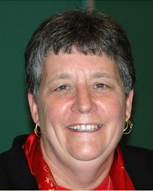
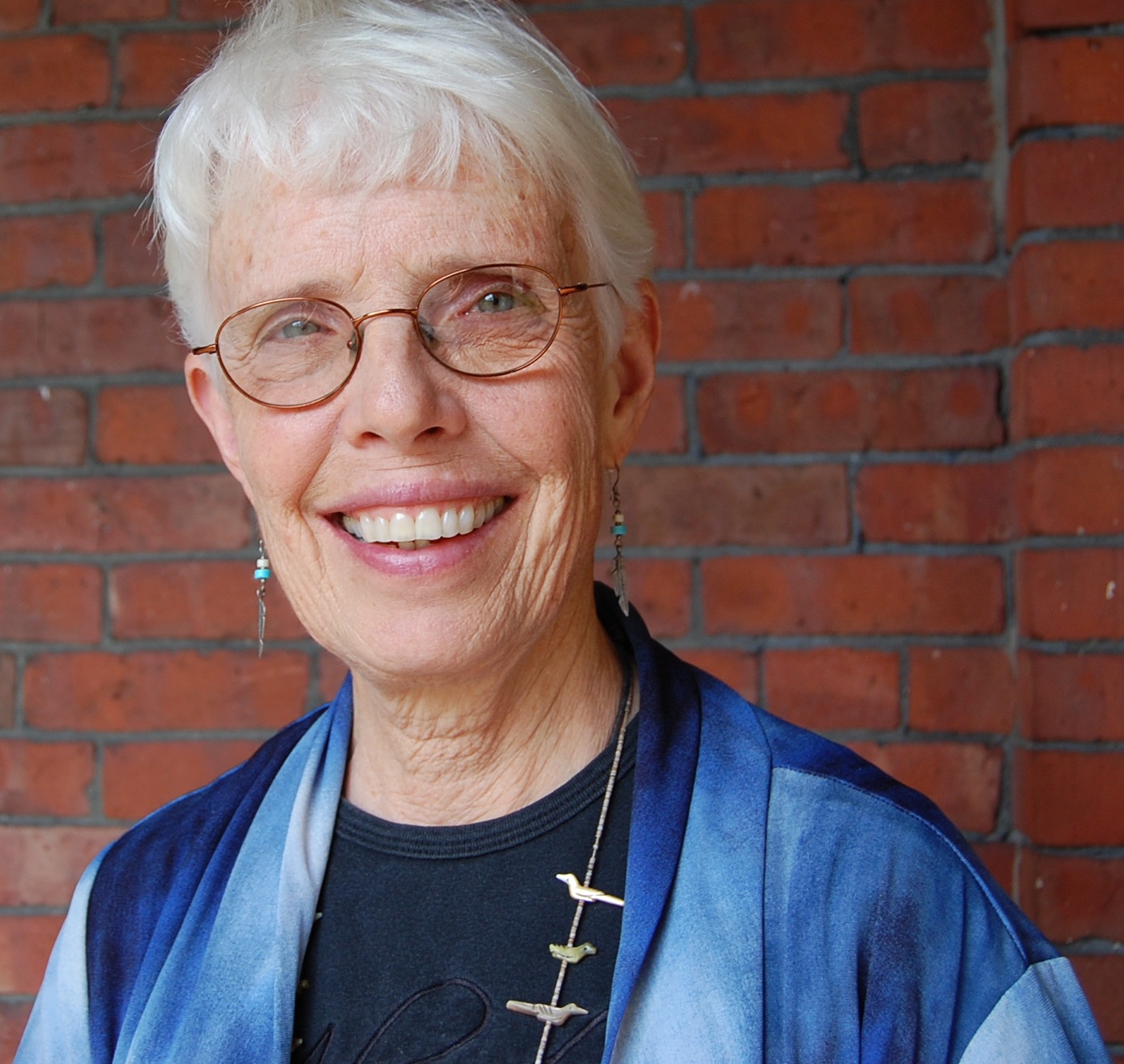
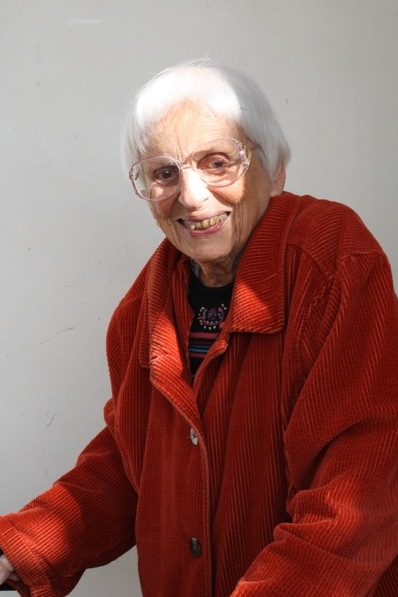
Margaret Mann, “Life is Tough, Deal with It”
Wednesday, April 8, 2014
1 pm – 2 pm EST
WATER thanks Margaret Mann, a
longtime friend, for her candid, smart, and spiritual contribution to this
series. Several people remarked that it was so wonderful! Please feel free to
share with friends.
What follows is:
a. Margaret’s presentation,
including a section from her book
b. WATER’s notes of the
Q+A/discussion section
Remarks
by Margaret Mann:
Good morning. I want to thank my very good friend Mary for
inviting me to do this and for being a great friend for the last 30 years or
so.
“On March 1, 1997, when I was fifty-two years old, I went
out to dinner with friends. Four months later I returned home in a wheel
chair. A blood vessel had burst inside my spinal cord, leaving me instantly
paralyzed from the waist down. I now use a wheelchair full time.
In the years since, that blood vessel has taken my mind,
body, and spirit on a journey I could not have imagined in my wildest dreams.
In a split second, my life took off in a dramatically different direction than
I thought it was headed. When my life turned upside down, I was forced to learn
how to make sense of senseless random events and to learn how to rebuild a
satisfying life. I was forced to learn what it is like to be disabled, how to
circumvent hostile environments, and how to endure ridiculous government
policies.
My coping skills were forged in a multicultural crucible. I
am a Caucasian/Apache woman raised in Hawai'i by a Zen Buddhist. I am also a
lifelong lesbian with a passion for civil rights. Before the burst blood
vessel, I had a long career as a community organizer working in the national
offices of women's organizations in Washington, DC. The inspiration for my
recovery has come from my Buddhist practice and also from author Byron Katie in
A Thousand Names far Joy; both have
taught me that you will suffer in life to the same degree you wish things were
different. I could wish that I were not in pain 24-7, or that I could once
again walk along the beach and feel the water wash over my feet. I could wish
that my income had not been cut in half. I could wish that I were still
independent, living and working where I pleased. I could wish all these things
and suffer magnificently ...but I choose not to.
Everything about my disability has been a lesson in how
nothing stays the same (the Buddhist notion of impermanence). At age fifty-two,
I thought I was at the height of my career and would continue to earn a good
income until I retired some years in the future. But you never know.
It also became clear to me since my life was altered by that
little blood vessel that there really is no inherent value to any given
experience. Is it better to be able-bodied or disabled? I know now that we
simply get to choose how we will feel about everything that happens. You could
choose to think your life is ruined by being paralyzed and suffer
marvelously...or you could think of it, as I do, as a fascinating turn of
events that teaches you something new every minute. You get to choose. By
letting go of the story of what was and embracing what is, you won't suffer
quite as much. It was a hard lesson to learn, but I think I finally got it.”
(pp. xi-xii)
But you never know…since I have been in the wheelchair I
have broken five bones in my legs at separate times, had a recurrence of breast
cancer, my gall bladder removed, my thyroid removed, a pump installed twice in
my abdomen, two surgeries just last year to fix a mistake made earlier in the
year and yet here I am, happy as a clam, living a good life in Hawaii. I think
life is a hoot! I live on Social Security and live well, I travel, I have all I
need of material things, I go out to eat a lot. I am in pain 24/7 and you would
never know unless I told you. Life is good.
Jean Shinoda Bolen said in her book
Close to the Bone that every cancer
patient is taken on a journey close to the bone, stripping away all the
pretense and illusion. I propose that every event in our lives that change
things dramatically take us on the same trip. You think you know what your life
is about and then Boom! Things are not the same anymore. You can’t walk, you
can’t talk after a stroke, you can’t think straight after a whack on the head,
you have a baby and you will not have a free moment to yourself for years, you
contract diabetes and are face with having your foot amputated. You never know
what is going to happen to you.
I make the point in my book that you will suffer in life to
the same degree you wish things were different. Well, over the years I have
realized that all suffering, just as the Buddha taught, is caused by wishing
things were different and hanging on to the original idea. So when some tragedy
strikes your life, who you were has disappeared and who you are about to become
is rising up before you. Hanging on to the disappearing self will cause you to
suffer. Expectations limit the possibilities. Hanging on to what was limits
what could come your way. Giving up the expectations unleashes your energy to
explore the future. Hanging on just makes you miserable in the present.
The present is a wonderful place to be, it is where
everything is happening. You just have to open your eyes and see it. I was
sitting by the ocean the other day and friend was going on and on about how
badly her mother had treated her when she was child. This woman was in her
early 60s…I said to her when was the last time your mother was mean to you? She
thought about a minute and said well she has been dead since 1992 and we
actually patched things up when I was in my 30s so about 30 years ago. I said
Let it go, what difference does it make now, you are retired, happily married,
have two great children and we are sitting by the beautiful ocean in Hawaii and
you are getting all worked up about what happened 30 years ago. Wake up!
My brother is fond of telling stories about our father and
how mean he was to him. I suggested that he could start telling people how
wonderful our father was and my brother was horrified. If he did the energy
around those stories would be changed and he would have to give up part of his
identity. No wonder he was horrified.
I routinely ask my counseling clients when they tell me they
are depressed, unhappy or down in the dumps because their partner left them or
they got fired or whatever the tragedy du jour may be, is anything happening to
you this moment? Is your partner yelling at you this moment? Are you being
fired this moment? Of course the answer is always no…why then are you upset?
They are upset because they are living in the past and hanging on to what they
wished was reality.
I saw a video of Bryon Katie talking with Oprah. Oprah’s
mother had recently passed away and she was talking about how sad she was.
Katie said why are you sad? Oprah repeated slightly incredulous that her mother
died. Katie said I know your mother died and what you need to know is she is
never coming back, you will never talk with her again, you will never see her
again, and that is the reality. Oprah was shocked! Katie said you are sad
because you wish she hadn’t died, but she is very dead. Katie asked her, did
you like your mother? Yes, said Oprah I loved her very much and we were very
close. Why then are you not celebrating her life and telling everyone how
wonderful she was? If you accept the reality that you will never see her again
then the only thing left to do is celebrate.
So, people have asked me, do this mean that you just lay
down and let life roll over you? Do I mean that you can have no opinion, take
no action, or want for a better world? No, it means take a good hard look at
what the reality of the situation is and take action on it. Give up wasting
your energy on wishing it wasn’t so.
I was recently asked to co-facilitate a 12 week workshop on
Sexuality Education for older adults and the coordinator wants me to take on
her 27 year old son who lives at home
with his parents, has no job and is remarkable unambitious. At the facilitator
training he always wanted to interpret the material as if his opinion was
better explanation than presented by the trainers. It was not. On one hand I do
not want this doofus co-facilitating with me on the other hand the program
standard insist there be diverse co-facilitators and he is the only straight
male with the training. I get to choose to be miserable and fuss and insist
that I will not teach this class under these circumstances…or could I instead
face the reality of the situation and drop my objection and take on this kid
and teach him a few things about facilitating. And once I do, not look back and
revisit or regret my decision. And as I do not know much about a young man’s
sexuality, he could have much to teach me as well. I get to choose.
We all get to choose each moment of the day. You don’t have
to have a tragedy to practice letting go. Look at what makes you angry. I can
bet without knowing what it is that you are desperately hanging on to a wish
that things were different. Look to see what that is, let go of the wish, and
then take action on the reality presented there.
The trick of course is how you know what the reality is. I
use meditation as my reality preceptor. I focus on my feelings in meditation,
where is it charged with extra energy? I breathe in and out, in and out, and
let my consciousness drift all around the problem. I know myself well, I know
that challenges to my ego are problematic to me and that I have trouble
believing anyone else knows as much as I do…a dialog sets in, on one hand it
says, you know how to facilitate a workshop, done it dozens of time, one the
other hand, every time you have set your ego aside and let some new experience
happen it has been good thing. So, come on, let go of that ego and
co-facilitate the workshop with the young man and stop calling him a doofus.
Easy to say now but the road here was bumpy and long. I was
raised in Hawaii by man who embraced Zen Buddhism when I was child. My father
was a mixed race man, Caucasian and Apache. He was raised by his Native
American mother who threw over her native beliefs for spiritualism of the 20’s
in California. My mother was Caucasian raised by the daughter and granddaughter
of Baptist ministers who never questioned one thing about her beliefs. My
mother was religion-neutral, I asked her once what her belief was, and she said
simply that she believed in God and that was it.
I only went to church once as a child. My Baptist
grandmother came to live with us and we all went to a Baptist services that met
in the cafeteria at the elementary school. My grandmother was from Maine but
this congregation was definitely Southern. My dark-skinned father was clearly
not welcome, my grandmother was embarrassed, and we never went again.
In high school, I made friends with a girl who parents had
been sent here as missionaries, in the 1960’s
from Texas no less. Her mother asked me if I would agree to read the New
Testament. I agreed and read the whole thing in a little red leather bound copy
with tissue thin pages. We discussed it when I had finished. She, of course,
was hoping that I would be born again with the reading of God’s holy word and
embrace Jesus as my lord and savior. Well, I said it was an interesting story
but how some man dying for my sins 1,960 years ago made no sense to me. We
talked about a lot of other things and finally she said that she was amazed for
a heathen (her word exactly) like me could be so kind and decent and Christian
like without believing in Jesus. This was the first time she had ever lived
outside of her little Texas town the first time she met people who were not
Christians. I wish I had kept track of her, I bet she returned to the little
Texas town a very different woman.
My father shared his insights on Buddhism and the world at
talks at the dinner table. Of course at 12 years old I would roll my eyes and
hope this was a short talk. Years later, though. I would hear echoes of his
dharma talks at other dharma talks I attended with Buddhist teachers. He taught
me early on about becoming one with the world by teaching me to shoot a bow and
arrow. He instructed me to pull the string back to my chin and hold it until I
felt at one with the universe before I let the arrow fly. Really good lesson in
getting in touch with your chi….he also signed me and my brother up for karate
classes. The old Japanese man sensei, a man of few words, had a stick that he
would whack you with across the shoulders while you stood in meditation, all
the classes together in rows in our chi, hand inside fist, everyone quiet and
not moving. We learned in our lessons how to never meet force with force, we
learned instead how to step aside and use our opponent’s energy against them.
Like the archery lesson we learned to channel our chi so that we were at one
with the universe. Powerful lessons for a young girl. But this really didn’t hit home until I was
47 years old.
I had nothing to do with religion in my 20’s but in my early
30’s I felt a longing, a calling, a something to make better sense of my
purpose for being here. I joined a big steeple Presbyterian Church and was
baptized at the 11 o’clock service one Sunday. I cried through the whole thing,
very moved by the ancient ritual. The next Sunday I was attending a woman’s
retreat and was recruited on to the Synod Committee on Women. Most folks serve
years in their church committees and then move up to a Presbytery committee and
then maybe never to a Synod but here I was one week a Christian and the next
week on a Synod committee. I was happy in the Presbyterian Church, we had a
huge choir with paid soloists, all sorts of events and dinners, and I went
along happily for years. I moved to Washington DC and eventually wound up at
Silver Spring Presbyterian with Margee Iddings. Within three months I was
ordained as an Elder and was serving on the Session. The first issue we had to
deal with was it became clear that the previous pastor sexually abused several
older widows in the church. Margee’s leadership in dealing with that crisis was
genius. The second crisis on the heels of the first was the sanctuary was
riddled with termites and had to be torn down and rebuilt. I used to joke that
I was not sure that the two events were related but they might be.
Margee’s sermons were enlightening and caused me to think
deeply about my faith. At one session meeting we were reviewing the application
of a flamboyant gay man, self-professed pagan to become a member. A tight assed
lawyer who was raised by missionaries opposed the application saying that he
must profess Jesus as his lord and savior. I said it doesn’t he must profess
Jesus as his only lord and savior and at that moment I realized that I did not
want to belong to any church that had membership requirements. It was a
slippery slope from deciding who can join to deciding who can be ordained as a
minister, who can serve on the session, etc.
Shortly after this I attended the General Assembly of the
denomination where the good Christians once again voted down the motion to
ordain LGBT folks as ministers. That was it! I was done with this hypocrisy.
Hypocrite: anyone who professes to believe in Jesus and his teachings and
flagrantly discriminates against anyone.
About this same time my father became ill and I went home
for 12 weeks to be with him as he moved from this world to the next. We talked
and talked. He reviewed his life, I reviewed my life. He repeated the dharma
talks of my youth. It was a most glorious time of my life. I returned home and
joined the
Mintwood Zendo.
I was now 47 years old. I went on retreat with Bobby Rhodes
(Soeng Hyang) of the Providence Zen Center. She gave me a koan about something
existing from the beginning of time to end of time, like a cloud, etc. etc. I
struggled with it and struggled with it. In a session with her, I said I got
it, it is like the Cheshire cat, yes she said like that but without the cat,
just the smile I said, and she said yes but without the smile and I got it! I
got it! I saw in an instant flash how everything is connected from the
beginning of time to the end of time like a cloud, I was this vast network
glowing and twinkling. I was breathless and speechless and I started to cry.
Just like that, Bobby said, just like that. That sense of connectedness has
never left me, that moment irrevocably changed my life.
Is that enlightenment? I don’t know…the lessons continue to
come, the challenges continue, and yet through it all I maintain some sense of
equilibrium.
One piece missing for me since I left DC in 2003 was
community. Until last year I struggled with finding a spiritual home, or a
satisfying social network. I was very lonely but kept present about it and
tried not suffer and did pretty well. Then last year I went to the Unitarian
Church to support a friend who didn’t want to go by herself and I found a
spiritual home. The minister is a Chinese gay man raised in the Philippines and
who used to be the MCC minister here in Hawaii. He quotes from the Dalai Lama
and Thich Nhat Hahn often. He spent some time at Plum Village in France before
coming to Hawaii. But the biggest treat is the congregation. We are diverse in
age, race, philosophy, gender, No dogma, no creeds, no doxology, and no one
god. I love it.
Q+A/Discussion
1. A
caller asked Margaret to say more about meditation.
Margaret
answered that meditation is a way to deal with reality—turning off the
messages/mind chatter in mind. The subconscious takes over when the rest shuts
down such that the essence of whatever is at hand rises up.
Another
caller, a friend of Margaret’s calling from Germany, mentioned the work of Renate
Rose—Thich Nhat Hahn: breath in/out; as soon as a thought starts let it go; let
go of ego; why am I upset in this moment—sitting quietly—concentrating on
breathing in/out and present moment; breathing in the breath of God, breathing
out love; enjoying the present moment.
2. A
participant called attention to Margaret’s insight that “You will suffer in
life to the same degree that you wish things to be different.” She asked how to
do help someone without being preachy?
Margaret
replied that she helps people understand that it is all thought. She told the
story of a client who came to her crying and to whom she told a joke about
penguins. The joke distracted the woman from her issues so that In The Moment she
was not sad. Instruction not preaching is Margaret’s way. She sometimes uses a
caring tone to ask, “Is that true?” often getting the answer that it is not at
the moment.
3. Margaret
was asked to talk some about the combination of Eastern and Western techniques
for managing pain, for seeing the world. The moderator said that she gets how
they work on their own, but asked how Margate puts them together?
Margaret
answered that Western medicine is good at certain things especially technology
(replace a heart etc.) but that western medical people tend to look at people
in parts not as whole. Western medicine is good at things that need acute
care—broken hip, for example. But many western doctors do not acknowledge that the
mind has anything to do with what’s happening. Eastern approaches take care of
the rest of it. All religions have some form of meditation that is helpful in
mind-body medicine. Jon Kabat-Zinn uses meditation as part of cancer treatment.
Margaret noted that if one dwells on how horrible cancer is you’ll probably die
of it!
Margaret
referred to the Rev. Margee Iddings’ sessions and sermons, which Margaret said,
did not sound preachy. She urged people to cut out pictures from magazines,
paste them on cards and take them home to be with the person pictures for the
next week, to pray with/for them.
4. A
caller said she was struck by Margaret’s courage, her insistence on practicing
openness to new life that streams in when we surrender, the inevitable
suffering that comes before harvest of joy. She asked Margaret about any thoughts
on engagement in social justice work.
Margaret
allowed as to how some of the most dedicated/effective civil rights activists
are Buddhist clergy. Accepting the Buddhist path does not mean not taking
action. She told how the gay marriage battle in Honolulu included the religious
right being angry but being met by pro-marriage clergy who sang “Amazing Grace.”
Margaret reported that it was effective, transforming the space with song and
eventually the marriage equality bill passed so now there is gay marriage in
Hawaii.
5. The
moderator asked about people who are stuck. What do you say to people who feel
stuck in life? In conversation with a woman who was in a job she didn’t like,
the moderator referred to Margaret’s book, suggesting that whining about a job
was so different from dealing with major life disruptions. Still, what would
Margaret say to her as a counselor?
Margaret
connected being stuck with fear. She would ask: What are you fearful about? What
is the worst thing that can happen? Trust that the world is good.
------------------------------------------------------------------------------------------------------------------------
The
next WATER Teleconference will be Tuesday, May 13, 2104, 1PM EDT with Cynthia
Tootle on”Greeting the Goddess.” Email "Register Me
Teleconference" to waterstaff@hers.com by Monday, May 12,
2014 in order to receive dial-in information.