Pages

31 May 2013

May 21 Early Influence Endure by Mary E. Hunt

Posted originally on Feminism in Religion Forum

Attention all campus ministers, youth workers, student chaplains, and assorted colleagues who work with young people: A number of leading women in the Protestant world began their work in and around the student movements. Their lives show that your work lasts forever!

Sara M. Evans’ edited volume Journeys that Opened Up the World: Women, Student Christian Movements, and Social Justice, 1855-1975, (New Brunswick, NJ: Rutgers University Press, 2003) includes many of their stories. It is dedicated to Ruth Harris who was its “organizer and cheerleader” when the authors met in person and on the phone to reflect on their lives. Ruth Harris, a longtime feminist colleague who worked very effectively in the United Methodist Church, died recently well into her 90s. Looking at her life and her impact on others made me think about how early influences endure through a lifetime. For many women in religion, experiences in various student movements were formative in ways that shaped their careers and contributions to the world.

Ruth was born in Nebraska in 1920. She studied music, and then applied to the Women’s Division of the Methodist Board of Missions to become a teacher. She trained at Scarritt College, a women’s school in Nashville that prepared students for domestic and foreign church work. Her church work began in China in 1947 and continued through active participation in the civil rights movement.

She served the United Methodist Church both in the Women’s Division on student issues and later for the Board of Missions as first executive secretary of University World. She was a tireless supporter of the World Student Christian Federation (WSCF) and one of the guiding forces behind the development of the Methodist Mission Intern Program. Countless young people got their ecumenical starts in programs and projects in which she was active.

Ruth Harris was a modest giant among women at 475 Riverside Drive in New York City, the Interchurch Center, where many of the mainline Protestant churches had their headquarters for decades in the twentieth century. Some are still there. The stories of the early women in those bureaucracies deserve a book that I hope someone will take on soon while there are still people to interview.

The great United Church of Christ leader Valerie Russell, Executive Director of the United Church of Christ's Office for Church in Society and former head of the City Mission Society of Boston, got her start in the YWCA. She became the assistant to Dorothy Height who was head of the National Council of Negro Women. They and many other YWCA women put eradicating racism at the top of their agenda. Val Russell, a lay leader like Ruth Harris and so many others before the ordination of women really caught on, died at age 56 after a career fuller than many who live to riper ages. She touched many young women’s hearts and minds. Her story is in the book thanks to Letty Russell’s writing.

Margaret Flory was a Presbyterian wonder who has written books of her own. She worked in that church’s bureaucracy starting the Junior Year Abroad, Frontier Internship in Mission, and Bi-National Service groups. Her ecclesial offspring are legion, her influence profound around the world which is more tightly connected because of her work. I met her when I was appointed to the Frontier Internship Program in the late 1970s. Ruth Harris was the Methodist funder of that “experiment in mission” which sent so-called “creative young Christians” (we FIs debated each term!) to places where the Protestant churches did not have missions. Margaret liked that I was the first Catholic participant. My years as an FI in Argentina turned me into a global citizen and an ecumenical, later interreligious, stalwart.

I thought of these women when I attended a recent SCM-USA 2013 National Leadership Conference in Chevy Chase, MD (suburban Washington, DC). Young colleagues came from around the U.S. and abroad for a long weekend of training and strategizing. One SCM colleague from India shared her region’s work. These seminary and college women and men are revitalizing that movement in ways that I predict will catch fire. Professor Rebecca Todd Petersled off the speakers with a presentation on contemporary ethical challenges.

Senior Friends of the WSCF met together and with the students over the same weekend to talk about ways of supporting this important work. One concrete expression was the donation of copies of the Journeys book to each student so that they could link their own journeys with those who went before them. Several Senior Friends, notably Alice Hageman, a retired feminist minister and lawyer, and Jim Palm, retired longtime director of the Stony Point Center, told poignant stories of own rich histories of involvement in this movement for peace and justice and how it shaped their lives.

I was struck by the comments of one young gay man who spoke of problems in a local student group over his sexuality. I was happy to point out to him that of sixteen authors in the Journeys book I could assure him that at least five, and probably more, were lesbians. They include the incomparable Charlotte Bunch, who cut her justice teeth on the student movement in the 1960s, founded the Center for Women’s Global Leadership, and went on to receive the Eleanor Roosevelt Award for Human Rights from President Bill Clinton. I alerted this young man and the rest of the group to the fact that they follow in the large footsteps of powerful, many of them ‘out’, women.

Read the book to see how many of the women pioneers trace their roots to Ecumenical Student Conferences in Athens, Ohio, or to YWCA sponsored antiracism events. Lots of links to Duke University in the 1960s and 1970s make clear that some campus pastors there were on the job. Duke alum Nancy D. Richardson tells about the influence of the YWCA and related progressive groups on her formation. She became involved in campus ministry and student services at Boston and Harvard Universities. She was one of the founding co-directors of the Women’s Theological Center (WTC), which in turn shaped dozens of women in the field into feminist activists/academics.

The threads are interwoven as people meet one another, begin to read and discuss the same authors, take courage and example from one other’s activism. Today’s dynamics are similar. Plus, we have technological possibilities our foresisters never dreamed about. One especially fun, creative example was the thirtieth birthday conference (yes a real conference) that my friend Emily Goodstein,  held at Hillel at George Washington University. It was informative, imaginative, and did I say fun with extra funds and donations going to Planned Parenthood of Metropolitan Washington, DC on whose board the celebrant serves.

Take heart that today the digital, Skype, Webcast, and even in-person meetings that religious leaders develop for and with young people are shaping lives for the long run. If they are half as successful as the amazing people and events that preceded them we are in good shape as a world.

May 15 Rape Culture, Sexual Violence, and Spiritual Healing by Gina Messina-Dysert

gmd_2948
Originally posted on Feminism and Religion.


Recently I had the great pleasure of presenting on the WATER Teleconference Series and dialoguing with women from around the world about how to promote healing in a rape culture. Likewise, in a previous post I discussed rape culture in the Church and its impact on victims of sexual violence and the greater community.  Within a rape culture, those who experience sexual victimization endure physical, emotional, and spiritual wounding. It is a victimization unlike any other, and one that we must continue to discuss in search of healing.

This topic is important to me for obvious reasons. As a woman, mother, and social justice activist, I am passionate about eradicating gender based violence.  This said, I also have direct experience with this brutality that plagues our society. Having worked with rape survivors for more than a decade, I have witnessed the suffering endured as a result of such violence.  My own mother died prematurely as a result of sexual and domestic violence; having come to learn of the horrors she lived through has greatly impacted my understanding of the deep spiritual wounding experienced due to our culture of shaming and blaming – our rape culture.

Click here to read the rest of the article.

May 14 Courage Needs to Make a Comeback to Create Change by Mary E. Hunt

MEHuntphoto
Posted originally on National Catholic Reporter.


Courage is an old-fashioned virtue that comes in many forms: physical, social and political. I have paid attention to it of late -- both its absence and presence -- in the hope that highlighting courage will make it multiply. A dose of courage would go a long way toward solving many ecclesial and civil problems.

Same-sex love is increasingly seen as part of human diversity, but ugly incidents continue to remind us that courage is still needed to love freely. Nicholas Coppola had been an active parish volunteer at St. Anthony's Parish in Oceanside, N.Y. He visited the sick, taught, raised money, acted as a lector, even served at the altar as an out gay man. Then someone anonymously reported to the local bishop that Coppola had married his partner.

This prompted an auxiliary bishop to inform the pastor, a Jesuit, that "it would be of concern" if someone teaching in a Catholic parish were known to be married in a same-sex union. Fair enough -- congratulations are in order for the happy couple -- but that was not what he meant. The pastor, claiming no options, relieved Coppola of his volunteer duties. Tens of thousands of people signed petitions in support of this generous man who only wanted to serve. Oddly, the bishop of the diocese of Rockville Centre mailed the signatures back without explanation.

I do not know any of these people personally. But what if some of them had acted courageously, standing up to a bishop who made a questionable pastoral judgment based on a timid tip? Both the pastor and the auxiliary bishop who did the dirty work for the bishop could have resisted. Imagine if either had refused to participate and simply told the local bishop he could deliver his own ultimatum to a faithful church volunteer. The shame alone might have stopped this unspeakable incident from occurring.

Feminist philosopher Mary Daly said as a person learns to swim by swimming, you get courage by acting courageously. She meant every dimension of the tautology. Agreed. It takes a certain gumption that these fellows apparently do not have -- at least not yet.

Others have it. The Rev. Thomas Ogletree -- a theological ethicist, Methodist minister and retired dean of Yale Divinity School -- officiated his son's same-sex wedding. Conservatives in the United Methodist Church are protesting the act.

"Sometimes, when what is officially the law is wrong, you try to get the law changed," Ogletree said. "But if you can't, you break it."

Thomas Ogletree said of his father, "He does the right thing because he believes in doing the right thing. And then, if there is any question about that, he is willing to stand up and place a claim for that in a public way."

That is a succinct definition of courage one parent passed on to his child.

Some people develop courage eventually. Cardinal João Braz de Aviz, prefect of the Vatican's Congregation for Religious, revealed recently he was not involved in the discussions that led the Congregation for the Doctrine of the Faith to order a reform of the Leadership Conference of Women Religious, an order that precipitated a massive negative reaction. By his account, the Vatican situation was a case of the left hand not knowing what the right hand was doing. He admitted humbly with obvious regret that at the time, he "didn't have the courage to speak." Pity, because it might have averted a major rift that will take a long time to repair. But now that he has summoned the courage, I hope the dynamics will begin to change.

Basketball player Jason Collins displayed what one sportswriter called "social courage" by coming out as the first openly gay man in a major professional sport. Good for him. Billie Jean KingMartina NavratilovaBrittney Griner and scores of other out lesbians in the women's sports world did not merit calls from the president and well-wishers by the thousands, but I will save that for another day. The point is that courage, wherever it is exhibited, is cause for celebration.

Hunger striking prisoners at Guantanamo are a contemporary profile in courage. Regardless of their alleged crimes, it is high time to close the prison. Witness Against Torture has an active petition campaign designed to spur President Barack Obama to courageous action. What remains to be seen is just what the president's moral tipping point is in a complex situation. Guantanamo is a long, drawn-out political disaster that has been simplified quite dramatically by the unspeakable force-feeding of courageous inmates. Sometimes courage comes too late.

Anne McGrew Bennett, one of the great pioneers of feminist theology, was courageous on multiple levels. She was arrested for disorderly conduct trying to speak with draft records officials in 1970; was relentless in her efforts to bring about inclusive symbols and images in Christian prayer, worship and theology; and was a founder of the Gray Panthers.

"She insisted on things that other people postponed insisting on," her son said. Timing is all in acts of courage.

I ponder how or if one can compel another to act courageously. Do we have the right to expect that mere human beings will surmount self-interest and act for the common good? I am not naïve about how complicated many decisions are -- weighing competing goods, preventing bad outcomes, limiting damage, and all the other complexities that make up a moral calculus. But I do know courage needs to come back into fashion in a big way in our wired time if we expect positive change.

[Mary E. Hunt is a feminist theologian who is co-founder and co-director of the Women's Alliance for Theology, Ethics and Ritual in Silver Spring, Md.]  

30 May 2013

June 12 Teleconference with Monica A. Coleman

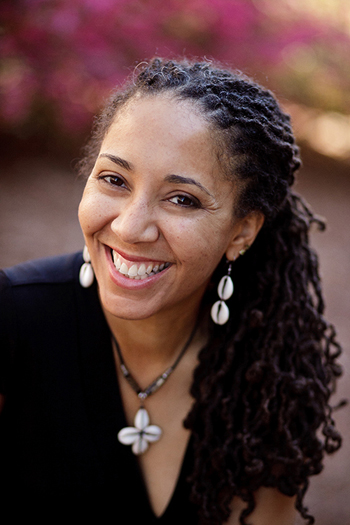
MonicaColeman“Third Wave Womanist Religious Thought” Wednesday, June 12, 2013 1 PM – 2 PM (EDT)

 Monica Coleman’s writings focus on the role of faith in addressing critical social issues. She writes about church responses to sexual violence in The Dinah Project: A Handbook for Congregational Response to Sexual Violence. In Making a Way Out of No Way: A Womanist Theology, Dr. Coleman discusses inter-religious responses to the joys and pains of black women’s lives. She is the co-editor of Creating Women’s Theologies: A Movement Engaging Process Thought. In her most recent edited work, Ain’t I a Womanist Too?: Third Wave Womanist Religious Thought (Fortress Press, May 2013), Monica traces this new movement within religious studies with deep roots in the tradition of womanist religious thought while also departing from it in key ways.

A scholar and activist, Monica A. Coleman is committed to connecting faith and social justice. An ordained elder in the African Methodist Episcopal Church, Dr. Coleman has earned degrees at Harvard University, Vanderbilt University, and Claremont Graduate University. Monica is currently Associate Professor of Constructive Theology and African American Religions as well as co-director of the Center for Process Studies at Claremont School of Theology in Southern California. She is also Associate Professor of Religion at Claremont Graduate University.

As a survivor of rape, Monica became committed to speaking out against sexual violence in 1996. She founded and coordinated “The Dinah Project,” an organized church response to sexual violence, at Metropolitan Interdenominational Church in Nashville, TN.

Because of her work with religion and justice, the interdenominational preaching magazine The African American Pulpit named Dr. Coleman one of the “Top 20 to Watch” – The New Generation of Leading Clergy: Preachers under 40. Coleman’s articles have been featured in a variety of publications including ESSENCE, Journal of Feminist Studies in Religion, Philosophia and Aspire: Women of Color Study Bible.

She blogs on the intersection of faith and depression at www.BeautifulMindBlog.com and writes a biweekly column, “Women, In Flesh and Spirit” at www.Patheos.com, the website named by Newsweek as “the place to get smarter about religion.” She has been featured as an interviewed guest on NPR, blogtalk radio shows, and www.PsychCentral.com. She teaches weekly Bible study in her local church, and speaks widely on religion and sexuality, religious pluralism, churches and social media, mental health, and sexual and domestic violence.

Recommended reading and video related to this teleconference include:

 "Must I Be a Womanist?" Journal of Feminist Studies in Religion

 "Ain't I a Womanist Too?" Inaugural Lecture at Claremont School of Theology (Video)

Email "Register Me Teleconference" to waterstaff@waterwomensalliance.org by Tuesday, June 11, 2013 in order to receive dial-in information.

30 April 2013

April 2013 Notes for Teleconference with Gina Messina-Dysert


WATER Teleconference with Gina Messina-Dysert
 “In Search of Healing: Confronting Rape Culture and Spiritual Violence” 
April 24, 2013


WATER is deeply grateful to Gina Messina-Dysert for her gracious sharing of remarks on confronting a rape culture. We consider this a central issue for feminist work in religion, and we hope that her contribution here will spark others to join in this important work.


Summary of Gina’s Opening Remarks

1. Introduction
Gina Messina-Dysert sends her thanks to Mary, Diann, Wendy, and WATER for these teleconferences.

In preparation for this teleconference, Gina thought that rape culture and spiritual violence would be a timely and important topic. Not only has violence against women been prevalent in the news recently, but it seems to be a subject that is constantly in the media. This demonstrates that rape culture continues to have an impact our society.

2. Rape Culture in the News

a. Steubenville: The reporting on Steubenville in the news has lead many to ask what would lead to these boys to think it was appropriate to photograph images of sexual assault and then post them to the internet? The answer is rape culture. The treatment of the victim in Steubenville exemplifies what rape culture is.

b. Rehtaeh Parsons: Similarly, the recent suicide of Rehtaeh Parsons in Canada, a teenage girl who was raped and had photographs of this rape spread around her school, demonstrates rape culture. These cases are not isolated but are forms of violence that women and girls face daily.

3. Defining a Rape Culture

Dr. Messina-Dysert defines a rape culture as: “A culture where rape and other forms of sexual violence are common and wide spread. In addition, sexual violence is condoned, it’s normalized, and it’s encouraged by prevailing norms and attitudes. And misogynistic practices are validated and rationalized through various acts of sexism.”

a. Societal Influences
Gina explained that a rape culture has a high rate of rape, but a low rate of prosecution and conviction. Victim-blaming and community rejection are experienced, as the two above cases have shown. This rape culture maintains a cycle of violence against women, and women lack full legal, social, and economic equality with men. Women are seen as inferior and as deserving of the violence against them.

The factors that contribute to a rape culture are numerous but include assigned gender roles, the language we use to describe men and women, myths about rape, and society’s treatment of victims of sexual violence.

Dr. Messina-Dysert encouraged us to examine our daily surroundings and consider how rape culture is present in ads and media because we engage with rape culture frequently and often in ways we do not recognize. One example that she gave is the popular young adult fiction series Twilight. This series sends the message that women cannot live without men and that women enjoy abuse as part of sex.

b. Rape Culture and Religion
Gina clarified that her analysis of rape culture and religion will be limited to Christianity, the Hebrew Bible, and New Testament. She points to other scholars work in the field including Marie M. Fortune, Joy A. Schroeder, and Susanne Scholtz.

Gina Messina-Dysert discussed the way that biblical texts support a rape culture giving the examples of Potiphar’s wife (Genesis 39) creating the image of a woman “crying rape” as untrustworthy, and Susanna (Daniel 13) putting forth the notion that rape victims should be silent. Scriptural studies on rape texts in the Bible have neglected the experiences of women. For example, traditional scholars of the rape of Dinah (Genesis 34) have focused on this text as the rape of Shechem even though Shechem is the rapist. In the case of Absalom’s rape of David’s 10 concubines (2 Samuel 16), patriarchal biblical scholarship talks of a political coup instead of rape.

Gina cited purity myths as another key element in rape culture within Christianity. Purity myths perpetuate the idea that women’s lives are of no value if she is not a virgin. The story of Lucretia, a Roman woman who committed suicide after her rape, has been repeated as an example for women such as the church father Jerome who said that rape is the one exception to suicide because not even God can heal a broken hymen. These stories support the idea that there is nothing that women can experience that is worse than rape.

A third aspect of Christianity that supports rape culture is the legends of the virgin martyrs that developed out of the tradition of early Christian women’s martyrdom. These legends show that women martyr themselves to protect their chastity, even if they experience gruesome deaths. Eleven-year-old Maria Garetti is a modern example of this. Maria “chose” (Dr. Messina-Dysert used this advisedly) to kill herself instead of being raped. The Catholic Church later canonized her for her protection of her virginity. She is lifted up as an example for other women.  We carry these stories with us from an early age, reinforcing the notion that virginity is more important than women’s lives, thus supporting rape culture.

4. Sexual Violence = Spiritual Violence

a. Double Victimization: Due to rape culture, sexual violence is different than other crimes and has come to be understood as a fate worse than death. In addition to the physical violence of the crime, the community in its rejection of the victim commits spiritual violence. Double victimization means that victims are “blamed and shamed because of the violence perpetrated against them” as well as from the physical violence.

b. Han: Gina believes the best way to describe the pain of rape victims is han. The Korean concept of han connotes a multiple suffering that compresses the worst sufferings in the world—especially sufferings from social injustice—into one suffering that damages the spirit. The spiritual victimization of han for rape survivors includes the rape itself, the community- and self-blaming, the inability to articulate pain, and the isolation and invisibility.

5. Healing: Han-Pu-Ri as a Model
Dr. Messina-Dysert asked, “What can we do to find healing in a culture that perpetrates such an incredible form of violence that is ongoing and relentless?”

Gina spoke of how impressed she was by Han-Pu-Ri as a model that can create healing in a rape culture. She cited the work of Chung Hyun Kyung on this topic. Han-Pu-Ri arose from the Korean Shamanistic tradition to respond to han in order “to offer a voice to voiceless” and allow people to speak about their han. In this practice, the community is responsible to release the han, either by eliminating oppression or comforting those who have experienced the violence. Han-Pu-Ri allows for collective healing/repentance and spiritual healing.

The three steps of Han-Pu-Ri are:
1) Speaking and hearing: Opportunity for victims to speak the oppression and to be heard by the community.
2) Naming: Allows the victim to identify the source of the injustice.
3) Changing: The attainment of peace by the victim through transformation of unjust situation.

Dr. Messina-Dysert suggests that women who are victims of sexual violence can come together in a process of accompaniment as they release their han and experience healing. Take Back the Night exemplifies Han­-Pu-Ri in many ways. This process can also take place on a smaller level because community can be between two people.
                                                                                                                                 

1. One woman shared about her website Our Stories Untold that provided a space to talk about sexual violence in the Mennonite Church, a place where these stories could be told. She struggles with how to encourage women to share their stories.

Gina’s work for over a decade with rape survivors has shown her the importance of survivors telling their stories, even if only to one person because it allows for healing. Asking women to share this is delicate because it can be powerful for others to hear but it also can be painful. It is always appropriate to encourage survivors to share because it to helps them and other women heal, but rape culture also makes it difficult to share. She explained that when we say, “Break the silence” and “Speak out,” it sounds so easy, but is really terribly difficult because we have a long way to go to remove the shame from this.

2. Another woman asked, “What do we need to say about men in this?” If there is spiritual death, then ought we also talk about spiritual homicide committed by men? She noted Carol Adam’s use of the “absent referent.”  She also raised concern about generalizing about women’s experience of rape where all women may not experience spiritual death in such a way.

Dr. Messina-Dysert clarified that it is not just men doing the killing but the rape culture. We all participate in a rape culture, and we need to recognize how we operate in this rape culture. She acknowledged that we are constantly telling women and girls how not to get raped as opposed to telling men and boys not to rape. We need to breakdown the culture that causes men to treat women like objects.

Gina explained that spiritual death is not a universal experience. She said that people have different experiences in coping with sexual violence, but patterns of blame, isolation, and shame can be recognized from testimonies that are shared. Gina pointed to the work of Traci C. West who has discussed race issues and victimization and how white women often do not address how experiences differ due to race, sexuality, class, religion, etc.

3. Another woman followed up on the previous question and appreciated the focus on community of Han-Pu-Ri. She asked about where justice-making and accountability for the perpetrator and the culture, which is an important part of healing, fits into the Han-Pu-Ri model.

Gina agreed that accountability and justice making are key components. In Han-Pu-Ri, hearing in step one is crucial because it calls upon the community that commits this violence to hear what is wrong and to collectively repent of this wrongdoing. Part of this is to acknowledge what it means to prosecute these crimes because sexual violence not taken seriously as exemplified by reports discussing the ruined lives of football players in the Steubenville case.

4. A participant said that she found the talk liberating and empowering as a survivor of rape by an Episcopal priest. She expressed that the retaliation from the hierarchy was dehumanizing and painful. Because so few people report the sexual violence against them, she asked about how we might challenge the status quo in order to give survivors a safe space to speak. She also asked about Gina’s thoughts on the relation between war culture and rape culture that both devalue the bodies and lives of women.

Gina thanked the woman for her courage of sharing the story, especially about the retaliation that she faced. Dr. Messina-Dysert asserted that to make safe spaces for sharing we have to transform the culture. We also have the responsibility to recognize how our own voices are important in this situation and the ways that we are involved in the culture. One way to go about this is to do more training with law enforcement, police officers, medical personal, etc. to challenge biases and assumptions about the victims because these are often the first people to respond to victims.

As for the second question of rape culture and war culture, Gina preferred to answer via email because of the importance and complexity of the question.

5. Another woman asked about what Gina would teach teachers to counteract rape culture?

First, Gina suggested that teachers need to pay attention to dynamics in classrooms between boys and girls. Also consideration of the content of work in the classroom is important. Focusing on male characters due to the belief that boys won’t be interested in female characters because women are not as strong does not help. Another element is to be a good listener to children without making accusations.

6. The final question asked was about what liturgical and ritual resources are available for survivors of rape?

Gina recommended Marie Fortune and the FaithTrust Institute’s resources. With respect to Christian resources, Gina said she focuses on the liberative teachings of Jesus as foundational to Christianity. Diann L. Neu also responded that within her work, she focuses on healing and reclaiming the body.


WATER thanks Gina Messina-Dysert and wishes her well on her new position at Ursuline College.
Please feel free to share this teleconference with friends, colleagues, students at http://www.waterwomensalliance.org/teleconferences-audio-and-notes/.
Join us for our next teleconference with Jeanette Stokes, director of the Center for Women and Ministry in the South, Wednesday, May 29, 2013, 1 PM EDT.

14 February 2013

January 2013 Notes on Teleconference with Carol P. Christ


Note from the January 16, 2013 Teleconference with Carol P. Christ


WATER thanks Carol P. Christ for her insightful presentation and her lifelong contribution to the field of feminist studies in religion. We look forward to her book, tentatively entitled Goddess and God after Feminism: Body, Nature, and Power, co-authored with Judith Plaskow. Following are notes on her recent teleconference remarks as well as her responses to questions and discussion.

----------------------------------------------------------------------------------------

Carol and Judith Plaskow are longtime colleagues who have collaborated on significant anthologies in feminist work in religion. This time they are trying to capture and expand on their conversations about the nature of the Goddess or God. They hold different views of divine power and found that no amount of rational argument could convince either of them to change her opinion. Their new work involves more than rational discourse and includes autobiography and dialogue about personal and philosophical differences. In the opening chapters they describe early experiences that shaped their views of God.

Carol grew up in California with her mother’s and father’s extended families, her mother, her father, and two brothers. Her grandmothers were Roman Catholic and Christian Scientist, and she was raised Protestant. Her sense of the divine included the idea that God is love, connection to the Blessed Mother, the assumption of health, and connection to nature. Her studies with (the early) Michael Novak taught her that theology should address existential questions and help us make sense of our lives.  She took from all of this that the earth is our home and that is nature full of wonder, that life in the body is good, and that the love of God and the Blessed Mother are always with us.

She describes the impact of the love she felt in her early years from her grandmothers and her mother. At the time of her mother’s death, she felt a powerful—revelatory—presence of love. This experience opened her to the love of friends and animals, nature and family, and helped her to stop pining for a single significant other.  She affirms that the Goddess is love—that has nothing to do with war, violence, or domination—and embraces the whole world.

Carol refers to the world as the body of the Goddess. She sees the Goddess as intelligent, embodied love that is the ground of all being, borrowing from Paul Tillich. With process theologian Charles Hartshorne, she affirms divine presence in the world. She says that panentheism expresses her sense that the Goddess is in but more than the world. She calls divine power not a power to coerce or control but a power to love, understand, persuade, and inspire. The difference between the Goddess and us is that while we sometimes love She always loves, and while we sometimes understand, She always understands.

Process philosophy provides Carol with a framework and foundation for thinking about change, relationship, and the interdependence of the web of life. The divinity is not an exception to these principles but the main exemplar of them. Evil in the world is not created by the divine power, but by human beings. We are responsible to repair the world. The divine power, the Goddess, promises to be with us all the way, and that, Carol says, makes all the difference.
----------------------------------------------------------------------------------------------
Questions and discussion followed


1. The first question was whether God is personal and whether we need anthropomorphic images.  Carol agrees with Marcia Falk that we need all kinds of images of the divine, including those from nature like wind. Where she differs with Judith Plaskow is whether the divine power is impersonal or personal. Judith believes that the divine power is impersonal while Carol believes it is a personal presence that cares about human and other than human lives.


2. In response to a question about community, Carol said that it is important to have a community to share spirituality and spiritual questions. She described her own kind of “dark night of the soul” when nothing made sense, when she did not have words for certain experiences, or confidence that anyone else would understand if she could muster the words. When she found the “courage to see” (Mary Daly "The Courage to See." The Christian Century 88 (Sept 22, 1971): 1108-1111), things that felt most vulnerable and painful were affirmed by other women as part of their experiences as well. She mentioned the powerful phrase of Nelle Morton, “hearing each other into speech.” (The Journey is Home, Boston, MA: Beacon Press, 1985, pp. 202-210) 

Carol said that it is hard to go against conventional religions; it is a big risk to speak out against traditional Christianity and still want to be a theologian in an academic world where Christian tradition has so much power. Carol quoted Mary E. Hunt, who said to Carol, “We’ve made the academy safe for women who are safer than we are.”

3. One participant honored Carol’s “brilliance and courage.” She asked Carol about the field of women in religion today. Carol described her disappointment. She said she had believed in the 1970s that women were “all in it together” in our quest to transform or find alternatives to patriarchal religion. But she has found that in the university/seminary system telling the truth about our lives and discussing it in rational way is not rewarded. (Editor’s note: Some would say punished!)  Carol said that she was not able to teach women and religion at an advanced level at San Jose State University, and that she was not offered a job at an institution where she could continue to develop the field with graduate students.  California Institute of Integral Studies (CIIS), where she is an adjunct teaching online graduate courses, is one of the few institutions with a Women’s Spirituality program that welcomes students and faculty whose interests are not tied to traditional patriarchal religions.

She also mentioned that she once heard a “feminist” scholar advise women students to do feminist work but not to acknowledge the word feminism or any relationship to methods created by feminist foremothers. She found this advice horrifying. With reference to the insight of writers like bell hooks and Paulo Freire, Carol affirmed writing in ways other people can understand and avoiding academic jargon as import aspects of feminist work in religion.


4. In response to another question, Carol talked about her work with the Green Party in Greece. She described her concern for ecology, her interest in bird watching, and her reading of Charles Hartshorne’s “Do Birds Love to Sing,” which confirmed her feeling humans are not only the species with the capacity to enjoy life. Lesbos, where she lives, is a stopping off point for migratory birds. Its wetlands are increasingly degraded. So Carol got involved in activism to save the wetlands. She met Michael Bakas of the Green Party (which was founded by Petra Kelly) who asked her to run for office in regional and national elections in Lesbos. She was pleased to discover that the Green party principles of sustainability, non-violence (in Greek, no violence), social justice, and participatory democracy expressed her own beliefs.

She spoke of the use of social media outside of academy, including FeminismandReligion.com where she publishes often. She also teaches online.

5. Another participant asked about Carol’s experiences of rituals. Carol replied that ritual is extremely important to her even though she does not belong to an on-going ritual group. She practices ritual during the four weeks of the year when she leads the Goddess Pilgrimage to Crete (www.goddessariadne.org). Years ago, she started a ritual group in California. She admires the work of Z Budapest, Starhawk, and others. However, she is less interested in aspects of ”Wiccan” practice than she once was—especially since discovering that some practices (e.g., invocations to guardians of the watchtowers, use of knives, etc.) were taken from the Masons or other groups that are not feminist. Carol affirms building altars, pouring libations, the simple sharing of gratitude, acknowledging that we did not come from ourselves but live in interdependence with one another. She likes the song by Faith Rogow, “As we bless the source of life so are we blessed.”

6. A Buddhist colleague asked Carol whether she was influenced by Buddhist teachers since so many of Carol’s views seem compatible with Buddhism. Carol said she is “a kind of Buddhist” in that she does not believe that the world revolves around herself (her ego). But she is not a non-dualist but rather a process thinker who affirms that we are part of the whole and in relationship with each other as individuals. She sees the divine power as a personal loving presence. To quote Carol, “I do not believe that I am God or God is I. I believe I am much less than [God], much more finite than [God].”

7. In response to an inquiry about her sense that we are all related in the web of life, Carol suggested we could recognize that such relationships are very concrete. Those with ancestry from the Middle East, Europe, Australia, and Asia are related to Africans who left Africa only about 50,000 years ago. All Europeans carry mitochondrial DNA from only a dozen or so ancestral mothers. 

Carol closed by saying that unlike some people who do not want life to end when they die, she has no need for heaven or reincarnation. She feels that her life will end, and she feels fine with that. Ancient cultures, she said, focused on the continuity of communities and of life, not the continuation of individual lives. She believes that we dissolve into earth leaving memories of our lives behind.  She feels no need for individual survival; rather, she is grateful to have been given life.


WATER is grateful for Carol P. Christ’s major contribution to the field of women in religion. We look forward to the book that she and Judith Plaskow are writing and wish them well on its completion.

03 January 2013

December 2012 Notes on Teleconference with Katie G. Cannon


Notes for Teleconference with Dr. Katie Geneva Cannon
“Translating Womanism into Pedagogical Praxis”
December 12, 2012

WATER thanks Rev. Dr. Katie Geneva Cannon for her wonderful teleconference with us. She proves once again why she is considered the consummate teacher, a pedagogue with few peers. We are honored to be in conversation with her.

Please see the attached pdf file of her lecture, “Translating Womanism into Pedagogical Praxis” (Temple University, April 2, 1997) in which she lays the foundation for this conversation. Dr. Cannon said that she is now writing a book on this topic, which we await eagerly. The notes that follow are from the conversation.
--------------------------------------------------------------------------------------------------------

Katie Cannon was named the Teacher of the Year by the American Academy of Religion in 2011. The experience of receiving the award and speaking at the conference made her realize anew the importance of her work on pedagogy. Her approach is divided into three parts:

1. Historical Ethos
            Until Katie went to Union Theological Seminary in NYC in 1974, she knew only Black educational culture. Teachers in that culture told students, “I will give you the best I’ve got and I want you to be even better.” A white supremacy environment was challenging to one who came from the rich legacy of enslaved peoples’ hope for education, land, and freedom.
Mrs. Corine Cannon, Katie’s mother, wanted Katie to be a teacher, a vocation she resisted initially because every woman in the family who finished college was a teacher. But in the spring of 1971, Katie did her practical training as a student teacher in a white public school in Rochester, NY with children of IBM, General Electric, and Kodak employees. She learned the subtleties of white ethnicity, for example how WASPS treated Catholics in ways that were analogous to how whites treated blacks.
 What Katie gleaned from this is that we each have a history. Part of being a good teacher is knowing the roots from which students have come, both positive and negative. Her own socio-economic background is working-poor, which means according to Katie, “My parents labored everyday of their working lives and our income was still below the minimum poverty level.”


2. Embodied Pathos
A second part of her approach is embodied pathos. It refers to helping students maximize their learning by teaching themselves what they need to know. All knowledge is embodied-mediated knowledge. In a provocative learning environment, we are invited to learn in ways that enable us to “feel with our brains and think with our hearts” (This phrase was used by Malidoma Patrice Some in his interview with Arthur Bloch, “African Ritual and Initiation,” Thinking Allowed, videotape H320; Berkeley, CA: Thinking Allowed Productions, 1988.).
There is a big difference between an educated person and an educated fool. The educated person can take whatever knowledge s/he is blessed to have and share it in clear and gettable ways; but the educated fool mystifies information, intentionally confusing and confounding the listening audience, causing people to feel like fools. Effective teaching is not dumbing down material, but communicating relevant information from heart to heart.
This approach makes Katie’s method dialogical, an invitation to share constructive conversational perspectives. She is a co-learner in every class. Back in the early 1980s, when Katie began her career on the lecture circuit, folks in several audiences voiced their frustration during the Q & A because they understood every word she said. Some concluded that Katie was not very smart since they could comprehend her lecture from beginning to end. They obviously had the perverse sense that a scholar is brilliant only insofar as they, the listeners, are baffled, mesmerized to the point of being clueless, not understanding what is being said. To the contrary, the Cannon approach is to embrace all learners and listeners with clear and straightforward language.

3. Communal Logos
The third aspect of Dr. Cannon’s unique approach to pedagogy is communal logos. This means paying attention to all voices, asking who is not here, who should be here, how can we include even more people into the ongoing moral reasoning and right-relating logic of our community. Everybody moves from individual particularity; we speak from the integrity of our own embodied space and place.  The clearer we are about our own socio-historical-cultural-religious-economic specificities, the sooner we can get the whole group to the common water table. If we go deep enough into the truth of our own particularities, eventually, we can arrive at common truth. Diversity and variety are key elements.


Lively discussion followed the presentation:
--------------------------------------------------------------------------------------------
1. The first respondent expressed her appreciation for the presentation. She described her own work on African American women in the balcony of apartheid Jim Crowism in the USA. From that spot in segregated balconies women could see what was happening in the center and assess if the spaces below were safe for them to live, move, and have their being. Dr. Cannon referred to this as the “epistemological privilege of women in the balcony.” We await this forthcoming dissertation and the published work of this important scholar.

2. A seasoned professor spoke about her 7:30 AM on Saturday “Women in the Biblical Tradition” class in which she had three men. She asked how Dr. Cannon handled single-gender classes.

Katie said she had never had the experience. She did say that some Black men studied homiletics with her, but others would not enroll in her course, “Ethical Themes for Relevant Preaching,” despite her writing the book on a leading Black homiletician: Teaching Preaching: Isaac Rufus Clark and Black Sacred Rhetoric (NY: Continuum, 2007). She asked her questioner what she had experienced. The professor said that she could tell by students’ body language that their levels of awareness changed as they realized how women were treated in the Bible, especially on issues of sexuality and law.

Dr. Cannons said, “The greyer my hair gets the more young men talk with me as mother/confessor.” Some, she said, even wonder if she is a ‘real’ minister, due to her progressive, open-mindedness regarding contemporary dilemmas.


3.  Another experienced colleague affirmed her own commitment to embodied pedagogy, her consciousness of her own presence in the room. She asked, “As a womanist what do you have to say about bringing our full selves, not simply being talking-heads in the classroom, in ways that meet privilege and dis/ease?”

Katie replied that there is a need for checks and balances. She requires a paper every time the class meets. With this requirement, she can comment on weekly papers about any negative/destructive ideas, attitudes, and behaviors that played out in the classroom. How to handle negativity is a challenge for every teacher. The challenge is to be as compassionate as possible with what is going on, while not getting sucked into reacting to negative quicksand. Reflecting back on the implications of what students are thinking/feeling/doing is helpful, and all of this becomes a tool for teaching.

Dr. Cannon described a process of open-ended questions following a presentation where everyone gives feedback both orally and in writing to the speaker. She described one student who was brilliant in his articulation of philosophical discourse, but his ethical interactions were poisonous/full of death dealing antics, especially the way he spewed forth racism and other forms of hatred. Based on his weekly writing assignments, Dr. Cannon was able to discern that a major source of this student’s intellectual venom was an external projection of internal failed father/son dynamics. About mid-way through the course she was able to say to him that “the alienation with and estrangement from his father must hurt a whole lot.”  Gradually, the isms he lashed out against others started to lessen.

The questioner asked about the personal cost to Dr. Cannon as a professor in such situations.
Katie replied that the there is only so much one can take in. Though she loves the church and teaching, there is a tremendous cost we pay when we work in hostile environments. She sometimes copes by dancing out the negative energy to Mo-town music, at other times weeping, and/or simply going to bed, taking long, restful naps. She described a case of a white woman student who simply could not bear to have an African American woman teach and evaluate her work.  White feminist colleagues arranged to get the student removed from the educational program.  She said, “We need people watching our backs. We also need a balance of self-care in the midst of this work that needs to be done.”


4. Another colleague inquired about on-line teaching as a way to spread the word.

Dr. Cannon expressed as to how she is not wildly enthusiastic about the new technologies, but will be teaching her first hybrid course soon. Conversation ensured about this important topic, underscoring the need for womanist pedagogy on-line, in order to reach the many people who want it. There is a need to get a grant ASAP to help colleagues learn how to teach online in an effective way. Now that the Association of Theological School is moving toward accrediting on-line M.Div. degrees this learning objective is imperative. One colleague encouraged others to use the available technologies as she did with great success.
           

6. The issue of grading was brought up.

Dr. Cannon shared that she has a very straightforward method. Her syllabus includes the various tasks a student must complete to get an ‘A’ so there is no guessing. A weekly paper is part of the expectations. Each assignment is a kind of learning container, an educational form that students must fill up with their own intellectual substance, though there is plenty of room for multiple-intelligence and personal creativity.

8.  Another call asked about the relationship between embodied pathos and communal logos.

Katie spoke of her early experience at the Annual Meeting of the American Academy of Religion (AAR), when she spoke on a panel about Beverly Wildung Harrison’s book focusing on bodily integrity and abortion, Our Right to Choose. When Katie stood up to speak, she instantly fainted in front of the audience.  She was revived by the hotel physician, got up and delivered her remarks, sure that if she did not, many African American women who were in doctoral programs, and the numbers of Black women coming along, would never be accepted and recognized as full-fledged, scholarly intellectuals in the AAR.

9. The final speaker talked about her peace studies work, Just Peace Theory http://justpeacetheory.com.

This work, like all of Dr. Cannon’s is part of the radical subjective responsibility to make the world different.


WATER is deeply grateful to Katie Geneva Cannon for her important contribution. Please join us on Wednesday, January 16, 2013, 1 PM EST, when Carol P. Christ will be our guest to talk about her current work.

Happy, peaceful holidays to all!